

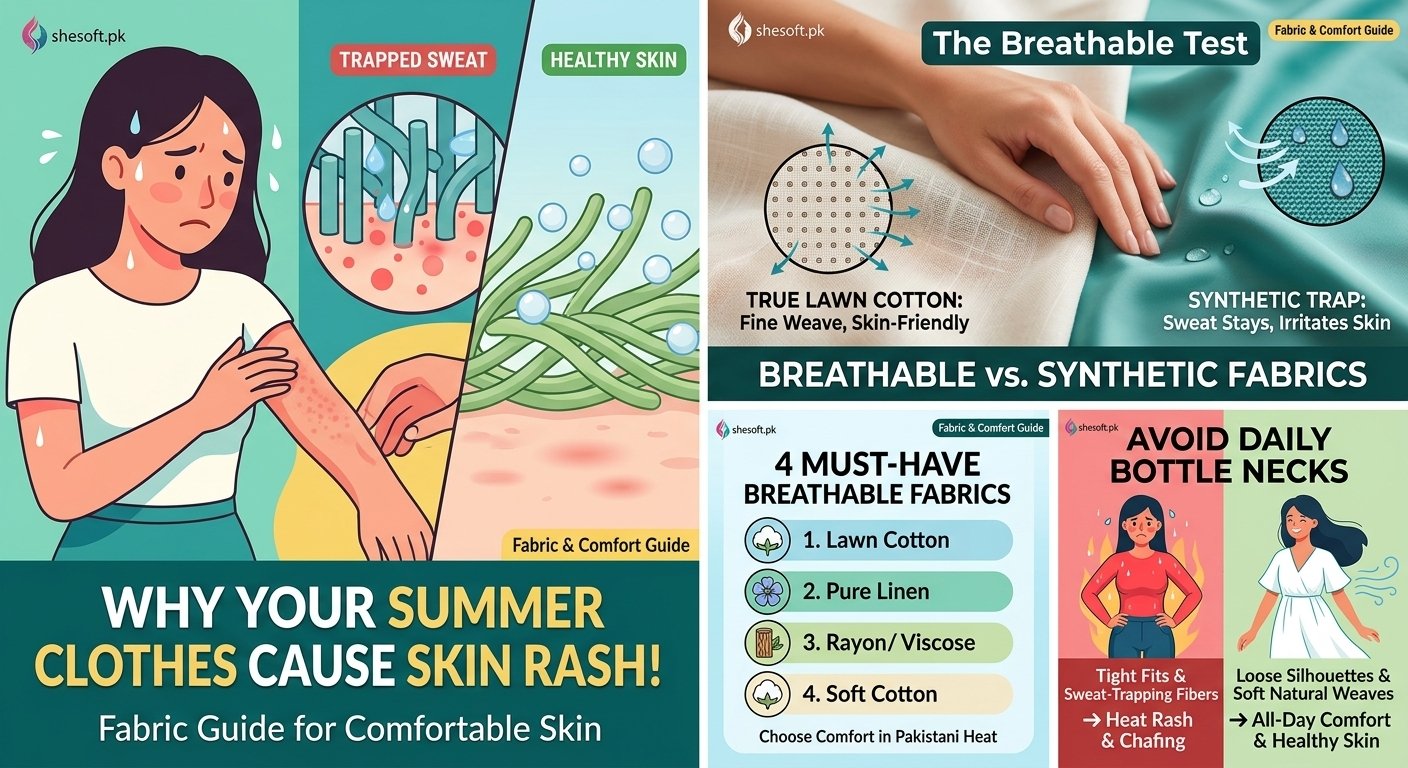
We’ve all experienced it: you pull on a cute summer dress or a casual co-ord set, step outside for twenty minutes, and instantly feel that prickly, itchy warmth creeping up your back or under your arms. By the time you get home, your skin is red, inflamed, or broken out in small, annoying bumps.
When summer heat hits, most people blame the weather or their skin sensitivity. But the real culprit is usually hanging right in your closet.
Many modern everyday outfits are woven with invisible synthetic traps that hold onto heat, lock in sweat, and scrape against delicate skin. Here is why your summer wardrobe is giving you a rash—and how to identify real, breathable fabrics that let your skin breathe all day long.
The Hidden Science: Why Your Summer Outfits Trap Heat
To understand why a outfit causes a breakout, you have to look at what happens at the fiber level when you sweat.
Body warms up and produces sweat to cool down.
Polyester acts like plastic wrap over pores.
Sweat stays locked directly against skin.
Wet fabric rubs continuously while pores block.
Redness, irritation, and chafing occur.
When your body warms up, it releases moisture to cool down. Natural fibers act like microscopic chimneys—they draw that moisture up and let it evaporate into the air.
Synthetic fabrics (like polyester, nylon, and low-grade acrylic blends) act like plastic wrap. They drop a physical barrier over your pores:
- The Moisture Lock: Sweat cannot pass through plastic-based threads. It stays trapped against your skin.
- Bacterial Growth: Warmth plus trapped sweat creates the ideal breeding ground for natural skin bacteria to multiply, leading to irritation and odor.
- Friction Micro-Tears: Stiff or heavily chemically treated synthetic yarns rub repeatedly against damp skin, causing painful chafing (contact dermatitis).
3 Warning Signs Your Clothes Are Irritating Your Skin
It is not always an obvious red rash. Everyday fabric friction and heat trapping show up in subtle ways throughout the day:
- Prickly Heat on Seams: Redness or tiny bumps developing specifically along your waistline, underarms, or inner thighs where tight seams rub against damp skin.
- The “Suffocating” Warmth: Feeling overheated indoors even when the AC is running. If a fabric does not breathe, your core temperature stays elevated.
- Post-Wash Stiffness: Clothes that felt soft at the store but feel scratchy, stiff, or static-heavy after just one or two wash cycles.
Natural vs. Synthetic: How Popular Fabrics Perform in Heat
Not all fabrics are created equal when the sun comes out. Here is how common daily wardrobe materials compare when it comes to breathability and skin health:
| Fabric Type | Source | Breathability | Moisture Handling | Heat Rash Risk |
|---|---|---|---|---|
| Pure Lawn / Cotton | Natural Plant Fiber | Very High | Absorbs & Evaporates Quick | Very Low |
| Linen | Flax Plant Fiber | Extremely High | Rapid Drying & Cooling | Very Low |
| Rayon / Viscose | Reconstituted Wood Pulp | Moderate to High | Light & Breathable | Low |
| Polyester Blends | Petroleum / Plastic | Low | Traps Sweat & Heat | High |
| Nylon / Acrylic | Synthetic Polymers | Very Low | Non-Absorbent Barrier | Very High |
How to Spot Truly Breathable Fabrics Before You Buy
Shopping online or in-store can be misleading—labels often claim a garment is “lightweight,” but lightweight does not always mean breathable. Use these three simple tests before adding an item to your summer closet:
1. The Light & Air Weave Test
Hold the fabric up to a soft light source. You should see a uniform, fine grid of tiny pinhole spaces between the threads. If the weave looks solid like a smooth sheet of plastic, air will not circulate through it easily.
2. The Touch & Crush Feeling
Pure natural cotton and high-grade lawn feel cool to the initial touch and have a soft, natural give. If a fabric feels slick, slippery, or springy like gym wear, it contains high synthetic content that will trap heat.
3. Check for Pre-Shrunk, Chemical-Free Finishes
Chemical dyes and stiff starch treatments used in cheap manufacturing irritate sensitive skin. Look for clothes made with skin-friendly dyes and pre-washed finishes so the fabric feels soft against your body from day one.
Everyday Wardrobe Tweaks for Allergy-Free Comfort
Eliminating heat rash isn’t just about throwing away your clothes—it’s about making smarter daily styling choices:
- Switch to Loose, Fluid Silhouettes: Tight clothes press damp fabric directly into your pores. Opt for relaxed cuts, fluid A-lines, and wide-leg trousers that allow air to flow between the garment and your skin.
- Ditch Synthetic Slips: If you wear slips under sheer dresses, ensure the inner layer is 100% breathable cotton or lawn. A synthetic inner slip completely cancels out a light outer dress!
- Wash with Gentle, Fragrance-Free Detergent: Harsh laundry powders leave chemical residues trapped in the fibers, which re-activate and irritate your skin the moment you start to sweat.
Stay Cool and Rash-Free All Summer Long
You shouldn’t have to choose between looking put-together and staying physically comfortable. By ditching sweat-trapping synthetic blends and choosing light, skin-friendly natural weaves, you can go through hot days without dealing with itchiness, chafing, or heat breakouts.
Looking for daily apparel that puts your skin first? Explore SheSoft’s Lightweight Lawn & Soft Cotton Collections—thoughtfully designed with ultra-breathable, hypoallergenic fabrics made for all-day effortless comfort.
Explore Shesoft Premium Intimate Wear
Designed with 100% breathable organic cotton, wireless comfort support, and discreet packaging across Pakistan.
